
Ask a question
Ask using text, audio recordings or photos, without starting with a search.
Knowledge AI stores manuals, drawings, past cases and workplace conversations, letting you ask questions and view answers with source documents. It supports decisions on the spot without starting with a search.
See potential causes, recommended actions and work procedures alongside their source documents, without having to begin by searching.
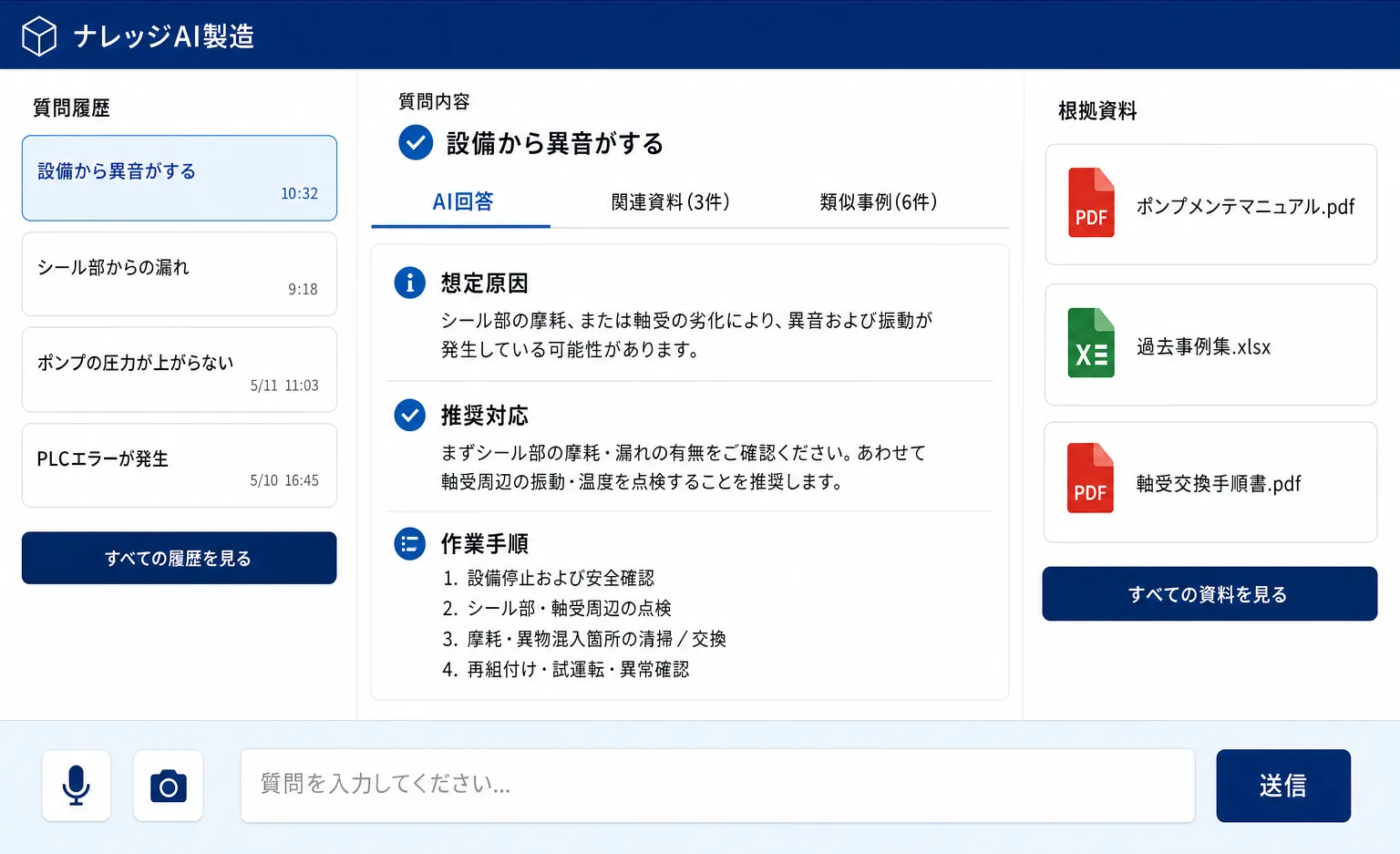
Ask using text, audio recordings or photos, without starting with a search.
The system suggests potential causes, recommended actions and work procedures from stored documents and cases.
Review manuals and past cases alongside the answer, keeping the basis for your decision visible.
When questions concentrate on particular people and opening folders does not lead to the right procedures, the issue is often where knowledge resides, rather than a lack of documents.
Equipment problems and decisions repeatedly lead to questions for the same people.
Scattered manuals and past cases make needed information difficult to find quickly.
When equipment malfunctions, time is spent searching for procedures and similar cases.
Inspection methods and decision criteria remain with individuals, and training new staff takes time.
Start with recorded conversations and existing PDFs, Excel files and drawings, without adding special data-entry tasks.
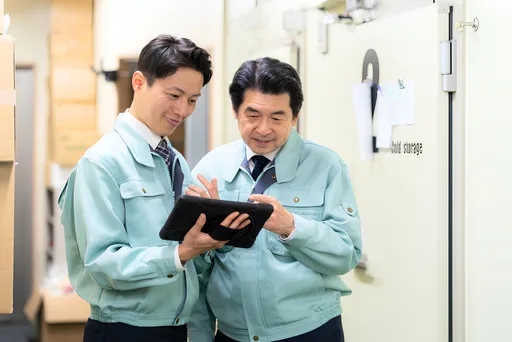
Record conversations in which junior staff ask experienced colleagues questions; AI summarizes, organizes and stores the knowledge.

Import existing manuals, PDFs, Excel files and drawings. No special operations are required.

Accumulate knowledge during operation and work toward answers that support judgments closer to those of experienced staff.
One platform can provide initial answers for equipment problems, procedure checks, similar cases, technical knowledge transfer and questions across locations.
Identify potential causes and recommended actions from unusual noises, leaks, errors and other symptoms.
Refer to inspection and replacement procedures on the spot, together with source documents.
Quickly find similar cases from past response records.
Retain experienced staff's decision criteria and shorten the initial stages of training.
Provide initial answers to on-the-spot questions using accumulated knowledge.
Access knowledge scattered across locations through the same system.
We measure results by time previously spent checking, searching, restoring operations and training—not simply by whether AI was introduced.
Retain answers and their basis so that every decision does not require asking someone.
Search across scattered documents and navigate to the required pages.
Immediate access to similar cases and procedures reduces uncertainty in the initial response.
Retain procedures and decision-making patterns to support training beyond on-the-job instruction alone.
We aim for answers grounded in your drawings and past responses, rather than a general-purpose chat service.
We build around your documents, workflows and decision criteria to make the system useful for your company.
We work with you from identifying manufacturing challenges to proposing practical uses.
We continuously improve answer accuracy and how knowledge is used after operations begin.
We help with practical use throughout the process, from selecting target operations to importing documents, workplace trials and improvements.
We identify target operations, document locations and frequently asked questions.
We define users and use cases, then specify the documents to import and the form of answers.
We verify accuracy with real data and make the system usable in the workplace before expanding it.
From small deployments for individual tasks to entire factories, we improve accuracy during operation.


